-
2026
Benjamin Williams, Stephen Suryasentana, Karen Donaldson, & James Minto (2026). AI-driven underwater 3D scanning: enhancing efficiency and accuracy with Bayesian optimization and Gaussian process regression. Data-Centric Engineering 7, e17.
-
2026
Brian Sheil, Christos Anagnostopoulos, Róisín Buckley, Matteo Oryem Ciantia, Eky Febrianto, Jinlong Fu, Zhiwei Gao, Xueyu Geng, Bin Gong, Kevin Hanley, Pengpeng He, Kostas Kolomvatsos, Bruna de CFL Lopes, Jelena Ninic, Marco Previtali, Mohammad Rezania, Agustin Ruiz-Lopez, Jin Sun, Stephen Suryasentana, David Taborda, Stefano Utili, Scott Whyte, & Pin Zhang (2026). Artificial intelligence transformations in geotechnics: progress, challenges and future enablers. Computers and Geotechnics 189, 107604.
-
2026
Xiaoqi Zhou, Brian Sheil, Stephen Suryasentana, & Peixin Shi (2026). Graph attention neural network for subsurface stratigraphy on spatial and feature level using multiple-source sparse exploration data. Advanced Engineering Informatics 70, 104108.
-
2026
Stephen Suryasentana, & Bruno Stuyts (2026). Machine Learning in Offshore Geotechnical Engineering. CRC Press.
-
2026
Benjamin R Williams, Stephen K Suryasentana, & Brendan F O'Boyle (2026). Predicting site-specific suction caisson installation pressure with limited data: A multi-fidelity temporal fusion framework. Ocean Engineering 363, 126556.
-
2025
Stephen K Suryasentana, Brendan O'Boyle, & Felix C Schroeder (2025). Back-analysis and insights on suction caisson self-weight penetration from Seagreen 1 offshore wind farm. 5th International Symposium on Frontiers in Offshore Geotechnics (ISFOG2025).
-
2025
Ioannis Kamas, Stephen K Suryasentana, Harvey J Burd, & Byron W Byrne (2025). Data-driven 1D design model for monotonic lateral loading of monopile foundations. MethodsX 103738.
-
2025
Stephen K Suryasentana, Brendan F O’Boyle, John Davidson, Sarunas Bartkus, Felix Schroeder, & Zefeng Zhou (2025). Enhancing CPT-based suction caisson penetration design: insights from back-analysis of large-scale field installation data. Journal of Geotechnical and Geoenvironmental Engineering 151(7), 04025053.
-
2025
Biao Yuan, Chung Siung Choo, Lit Yen Yeo, Yu Wang, Zhongxuan Yang, Qingzheng Guan, Stephen Suryasentana, Jinhyun Choo, Hao Shen, Maria Megia, Jiangwei Zhang, Zhongqiang Liu, Yanjie Song, Hui Wang, & Xiaohui Chen (2025). Physics-informed machine learning in geotechnical engineering: a direction paper. Geomechanics and Geoengineering 20(5), 1128-1159.
-
2025
Xiaoqi Zhou, Brian Sheil, Stephen Suryasentana, & Shi, P. (2025). Uncertainty‐guided U‐Net for soil boundary segmentation using Monte Carlo dropout. Computer‐Aided Civil and Infrastructure Engineering 40(10), 1370-1387.
-
2024
Stephen K Suryasentana, Brian B Sheil, & Myles Lawler (2024). Assessment of Bayesian changepoint detection methods for soil layering identification using cone penetration test data. Geotechnics 4(2), 382-398.
-
2024
Stephen K Suryasentana, Harvey J Burd, Byron W Byrne, & Avi Shonberg (2024). Investigation of local soil resistance on suction caissons at capacity in undrained clay under combined loading. Computers and Geotechnics 169, 106241.
-
2024
Xiaoqi Zhou, Peixin Shi, Brian Sheil, & Stephen Suryasentana (2024). Knowledge-based U-Net and transfer learning for automatic boundary segmentation. Advanced Engineering Informatics 59, 102243.
-
2024
Xiaoqi Zhou, Brian Sheil, Stephen Suryasentana, & Peixin Shi (2024). Multi-fidelity fusion for soil classification via LSTM and multi-head self-attention CNN model. Advanced Engineering Informatics 62, 102655.
-
2024
Stephen K Suryasentana, Brian B Sheil, & Bruno Stuyts (2024). Multifidelity data fusion for the estimation of static stiffness of suction caisson foundations in layered soil. Journal of Geotechnical and Geoenvironmental Engineering 150(8), 04024066.
-
2024
Stephen K Suryasentana, Brian B Sheil, & Bruno Stuyts (2024). Practical approach for data-efficient metamodeling and real-time modeling of monopiles using physics-informed multifidelity data fusion. Journal of Geotechnical and Geoenvironmental Engineering 150(8), 06024005.
-
2023
Stuyts, B., & Suryasentana, S. (2023). Applications of data science in offshore geotechnical engineering: state of practice and future perspectives. SUT Offshore Site Investigation and Geotechnics SUT-OSIG-23-232.
-
2023
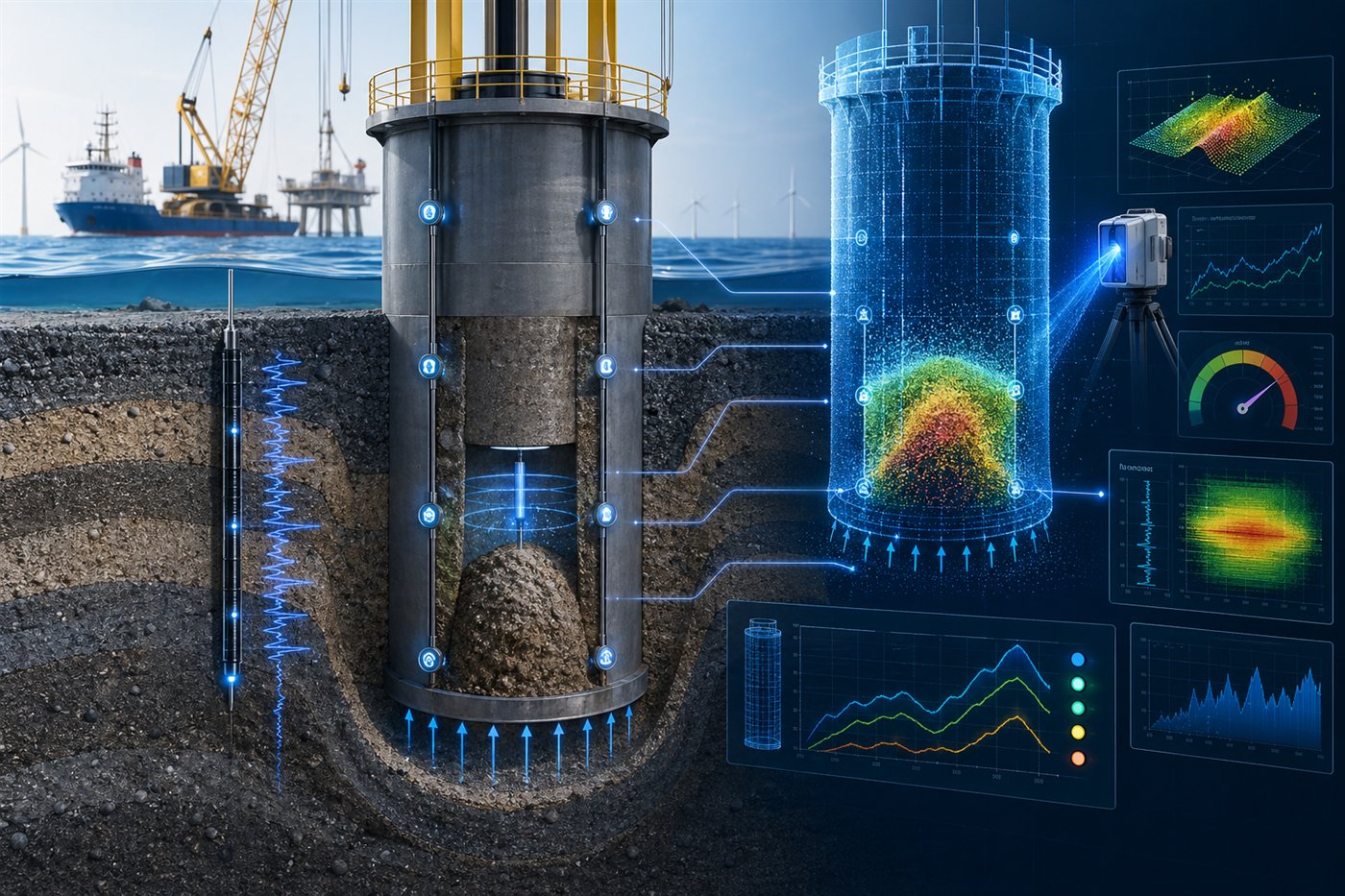
Williams, B., Suryasentana, S., Perry, M., & Donaldson, K. (2023). Artificial Intelligence (AI) driven 3D point scanner for monitoring soil plug hazards during the installation of suction caisson foundations. SUT Offshore Site Investigation and Geotechnics SUT-OSIG-23-240.
-
2023
Roisin Buckley, Yuling Chen, Brian Sheil, Stephen Suryasentana, Mark Randolph, & James Doherty (2023). Bayesian Optimisation Framework for Robust and Adaptive Driveability Predictions for Offshore Wind Piles.
-
2023
Róisín Buckley, Yuling Max Chen, Brian Sheil, Stephen Suryasentana, Diarmid Xu, James Doherty, & Mark Randolph (2023). Bayesian optimization for CPT-based prediction of impact pile drivability. Journal of Geotechnical and Geoenvironmental Engineering 149(11), 04023100.
-
2023
Suryasentana, S. K., & Sheil, B. B. (2023). Demystifying the connections between Gaussian Process regression and kriging theories. SUT Offshore Site Investigation and Geotechnics SUT-OSIG-23-236.
-
2023
Suryasentana, S. K., & Sheil, B. B. (2023). Demystifying the connections between Gaussian process regression and kriging. 9th International SUT OSIG Conference 1-8.
-
2023
Kamas, I., Harvey J Burd, Byron W Byrne, & Suryasentana, S. K. (2023). Generation of a general Cowden clay model (GCCM) using a data-driven method. SUT Offshore Site Investigation and Geotechnics SUT-OSIG-23-192.
-
2023
Buckley, R. M., Chen, Y. M., Sheil, B. B., Suryasentana, S. K., Randolph, M. F., & Doherty, J. P. (2023). Improving driveability predictions for offshore piles using Bayesian optimisation. SUT Offshore Site Investigation and Geotechnics SUT-OSIG-23-231.
-
2023
Stephen K Suryasentana, Harvey J Burd, Byron W Byrne, & Avi Shonberg (2023). Modulus weighting method for stiffness estimations of suction caissons in layered soils. Géotechnique Letters 13(2), 1-8.
-
2023
Stephen K Suryasentana, Myles Lawler, Brian B Sheil, & Barry M Lehane (2023). Probabilistic soil strata delineation using DPT data and Bayesian changepoint detection. Journal of Geotechnical and Geoenvironmental Engineering 149(4), 06023001.
-
2023
Stephen K Suryasentana, Harvey J Burd, Byron W Byrne, & Avi Shonberg (2023). Small-strain, non-linear elastic Winkler models for uniaxial loading of suction caisson foundations. Géotechnique Letters 13(4), 170-181.
-
2022
Stephen K Suryasentana, Harvey J Burd, Byron W Byrne, & Avi Shonberg (2022). A Winkler model for suction caisson foundations in homogeneous and non-homogeneous linear elastic soil. Géotechnique 72(5), 407-423.
-
2022
Stephen K Suryasentana, & Guy T Houlsby (2022). A convex modular modelling (CMM) framework for developing thermodynamically consistent constitutive models. Computers and Geotechnics 142, 104506.
-
2022
Brian Sheil, Róisín Buckley, & Stephen Suryasentana (2022). Intelligent Driveability Forecasting for Offshore Wind Turbine Monopile Foundations (iDRIVE).
-
2022
Stephen K Suryasentana, Harvey J Burd, Byron W Byrne, & Avi Shonberg (2022). Modulus weighting method for static stiffness estimations of suction caisson foundations in layered soil conditions.
-
2022
Brian B Sheil, Stephen K Suryasentana, Jack O Templeman, Bryn M Phillips, Wen-Chieh Cheng, & Limin Zhang (2022). Prediction of pipe-jacking forces using a Bayesian updating approach. Journal of Geotechnical and Geoenvironmental Engineering 148(1), 04021173.
-
2022
Stephen K Suryasentana, & Paul W Mayne (2022). Simplified method for the lateral, rotational, and torsional static stiffness of circular footings on a nonhomogeneous elastic half-space based on a work-equivalent framework. Journal of Geotechnical and Geoenvironmental Engineering 148(2), 04021182.
-
2021
Stephen K Suryasentana, Harvey J Burd, Byron W Byrne, & Avi Shonberg (2021). Automated procedure to derive convex failure envelope formulations for circular surface foundations under six degrees of freedom loading. Computers and Geotechnics 137, 104174.
-
2020
Stephen K Suryasentana, Harvey J Burd, Byron W Byrne, & Avi Shonberg (2020). A systematic framework for formulating convex failure envelopes in multiple loading dimensions. Géotechnique 70(4), 343-353.
-
2020
Brian B Sheil, Stephen K Suryasentana, & Wen-Chieh Cheng (2020). Assessment of anomaly detection methods applied to microtunneling. Journal of Geotechnical and Geoenvironmental Engineering 146(9), 04020094.
-
2020
Stephen K Suryasentana, Helen P Dunne, Christopher M Martin, Harvey J Burd, Byron W Byrne, & Avi Shonberg (2020). Assessment of numerical procedures for determining shallow foundation failure envelopes. Géotechnique 70(1), 60-70.
-
2020
Suryasentana, S. K., Burd, H. J., Byrne, B. W., Aghakouchak, A., & Sørensen, T. (2020). Comparison of machine learning models in a data-driven approach for scalable and adaptive design of laterally-loaded monopile foundations. Deep Foundations Institute (DFI).
-
2020
Brian B Sheil, Stephen K Suryasentana, Michael A Mooney, & Hehua Zhu (2020). Machine learning to inform tunnelling operations: Recent advances and future trends. Thomas Telford Ltd 173(4), 74-95.
-
2020
Byrne, B. W., Aghakouchak, A., Buckley, R. M., Burd, H. J., Gengenbach, J., Houlsby, G. T., McAdam, R. A., Martin, C. M., Schranz, F., Sheil, B. B., & Suryasentana, S. K. (2020). PICASO: Cyclic lateral loading of offshore wind turbine monopiles. Frontiers in Offshore Geotechnics IV: Proceedings of the 4th International Symposium on Frontiers in Offshore Geotechnics (ISFOG 2021).
-
2019
Suryasentana, S. K., Byrne, B. W., & Burd, H. J. (2019). Automated optimisation of suction caisson foundations using a computationally efficient elastoplastic Winkler model. Coastal Structures Conference 2019 932-941.
-
2018
Suryasentana, S. K., Byrne, B. W., Burd, H. J., & Shonberg, A. (2018). An elastoplastic 1D Winkler model for suction caisson foundations under combined loading. CRC Press 973-980.
-
2018
Stephen Karl Suryasentana (2018). Time-critical design methods for suction caisson foundations.
-
2017
Suryasentana, S. K., Byrne, B. W., Burd, H. J., & Avi Shonberg (2017). Simplified model for the stiffness of suction caisson foundations under 6 dof loading. Society for Underwater Technology 554-561.
-
2017
Stephen K Suryasentana, Byron W Byrne, Harvey J Burd, & Avi Shonberg (2017). Weighting functions for the stiffness of circular surface footings on multi-layered non-homogeneous elastic half-spaces under general loading. 19th International Conference on Soil Mechanics and Geotechnical Engineering, ICSMGE 2017.
-
2016
Stephen K Suryasentana, & Barry M Lehane (2016). Updated CPT-based p–y formulation for laterally loaded piles in cohesionless soil under static loading. Géotechnique 66(6), 445-453.
-
2014
Stephen K Suryasentana, & Barry M Lehane (2014). Numerical derivation of CPT-based p–y curves for piles in sand. Géotechnique 64(3), 186-194.
-
2014
Suryasentana, S., & Lehane, B. M. (2014). Verification of numerically derived CPT based py curves for piles in sand. 3rd International Symposium on Cone Penetration Testing.
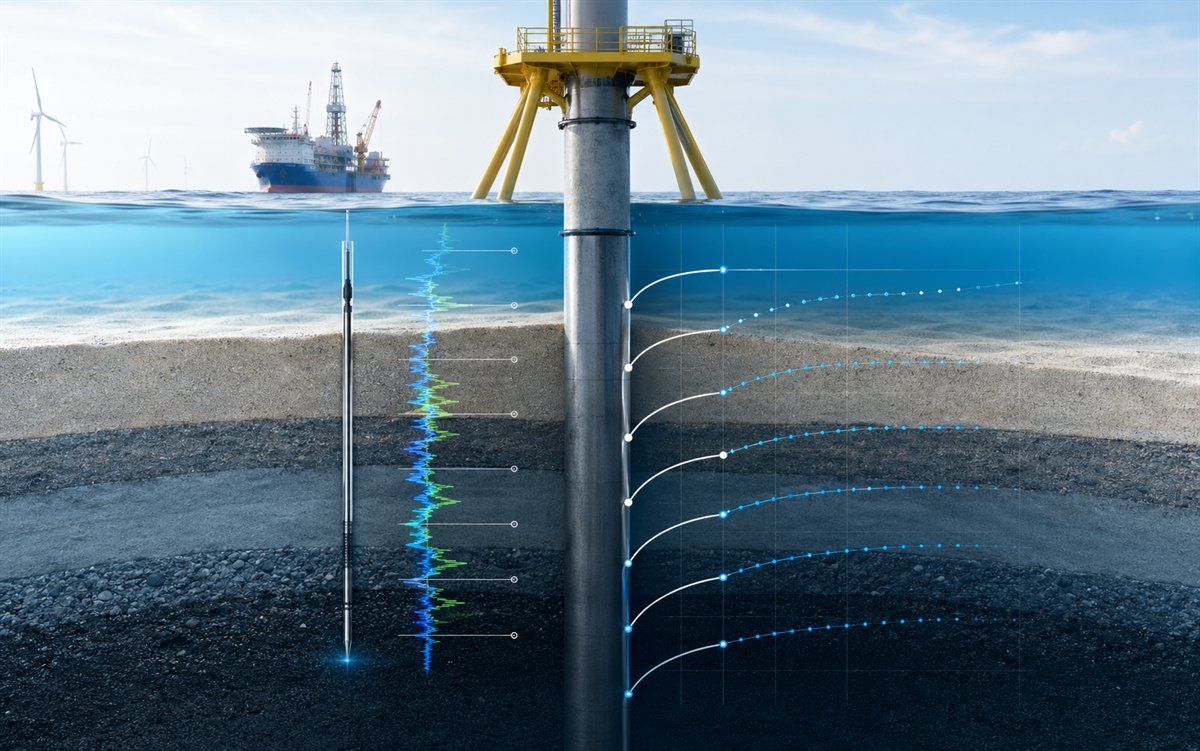 01
01

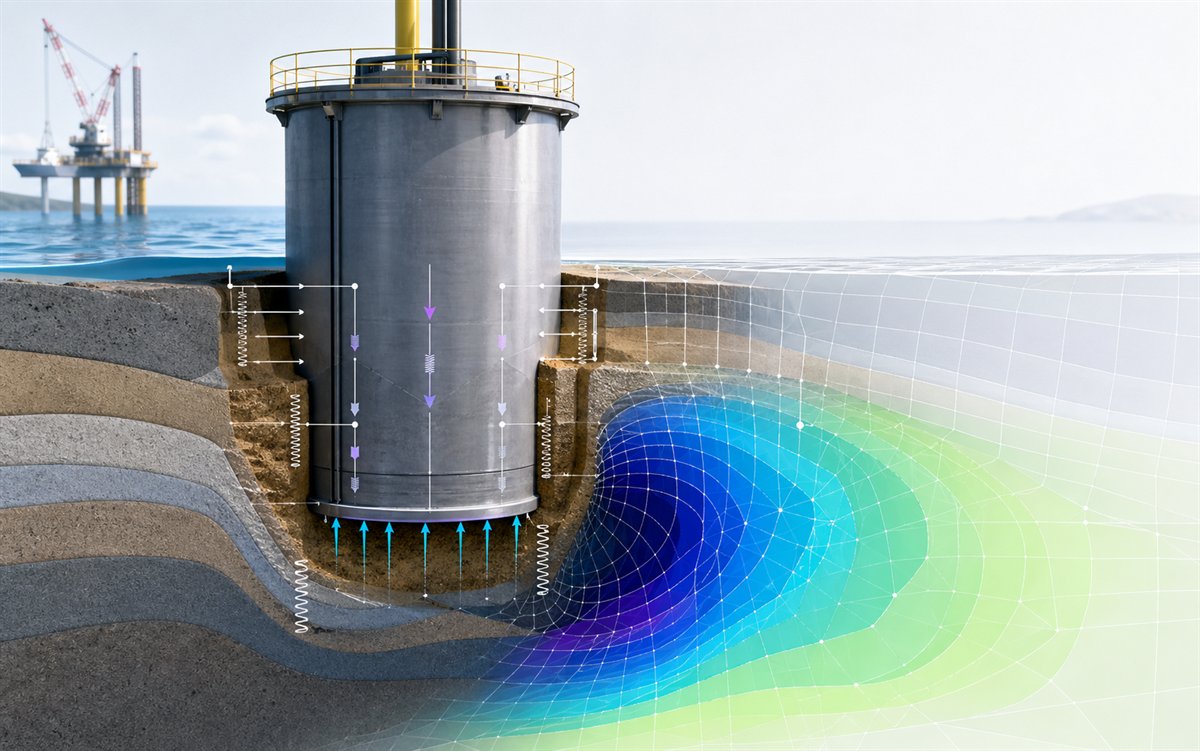 02
02
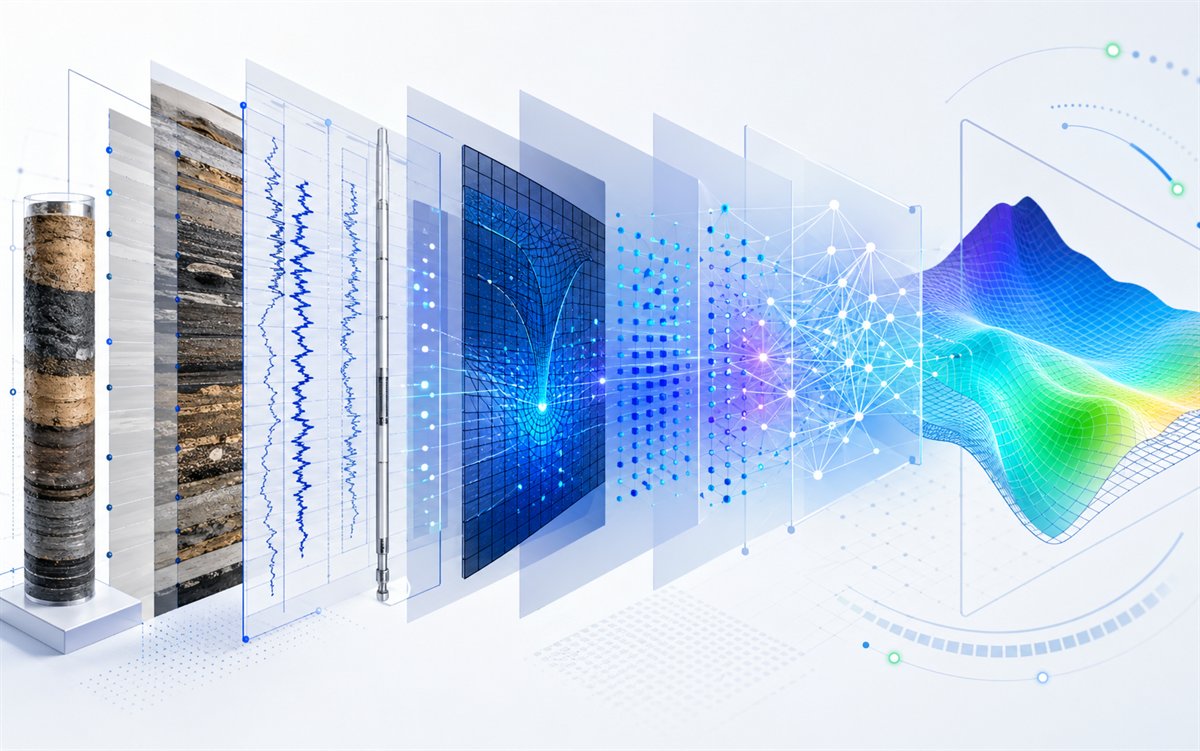 03
03
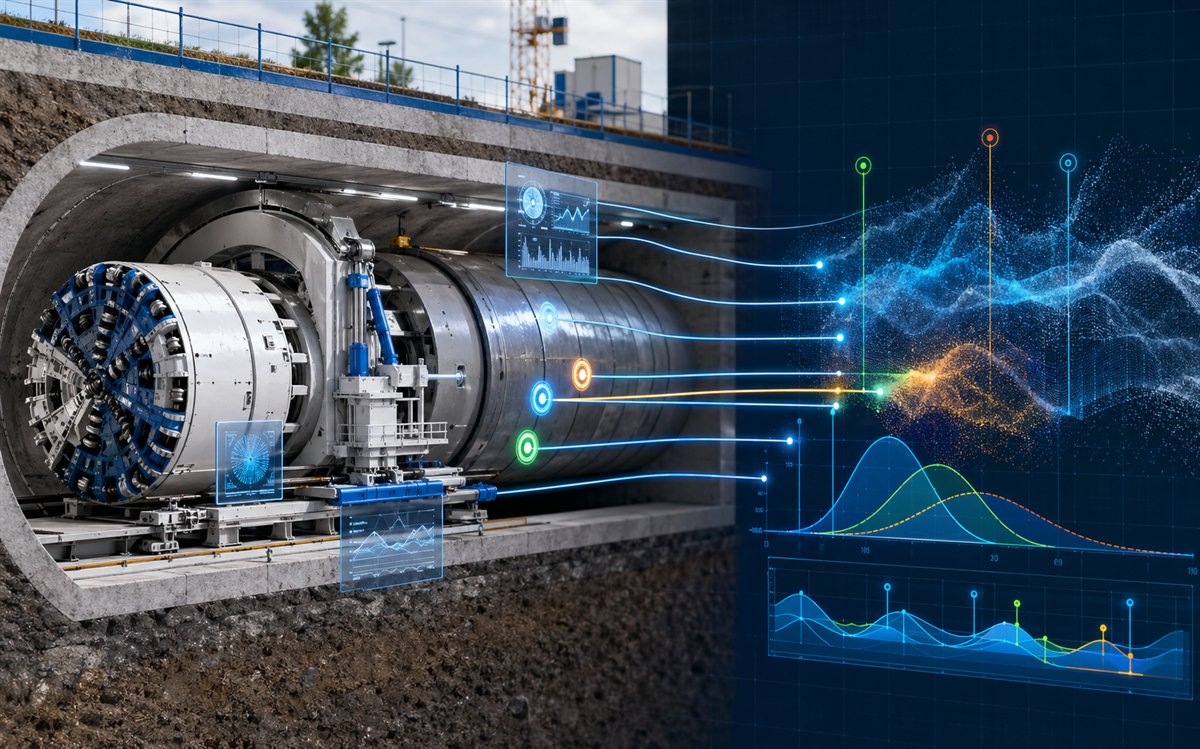 04
04
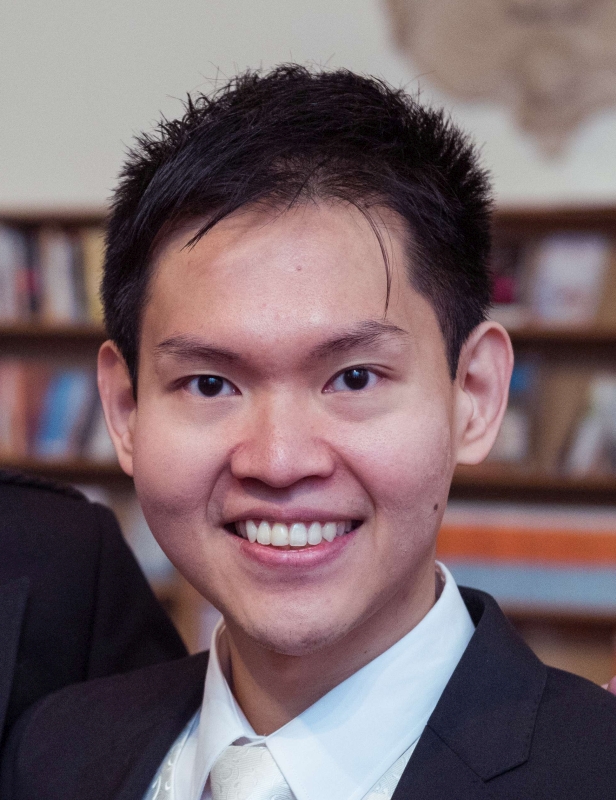 Principal investigator